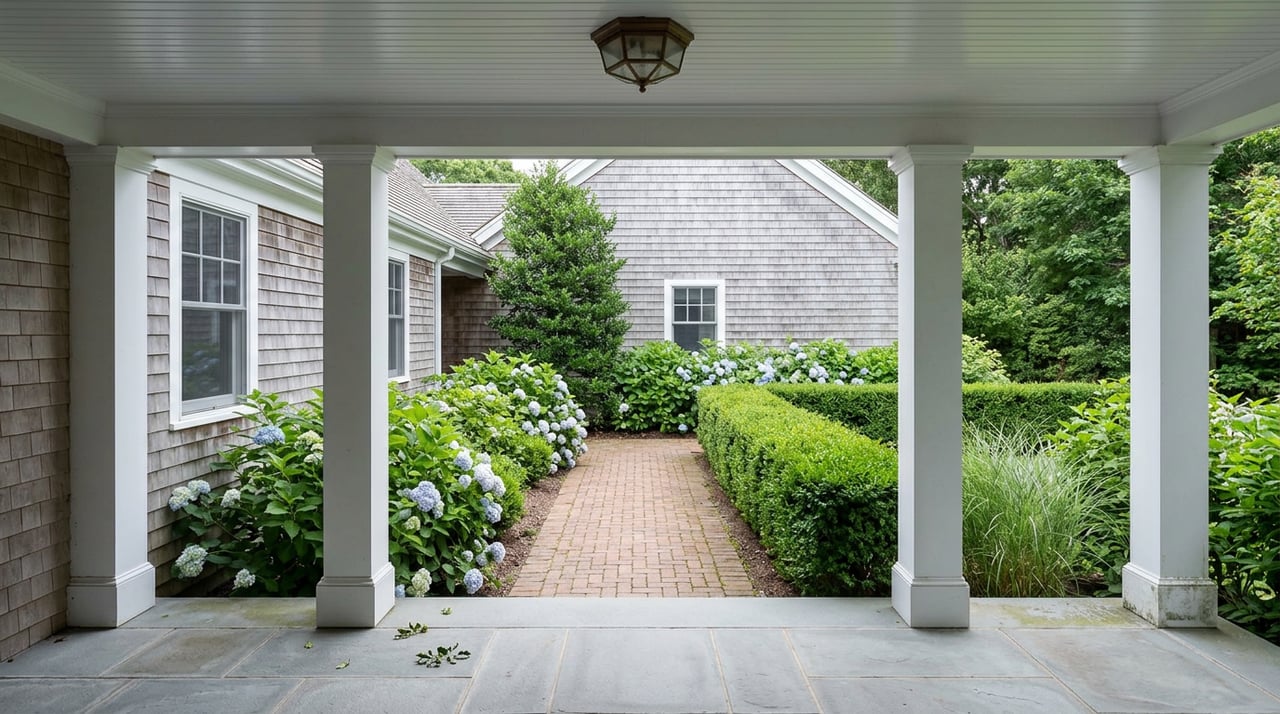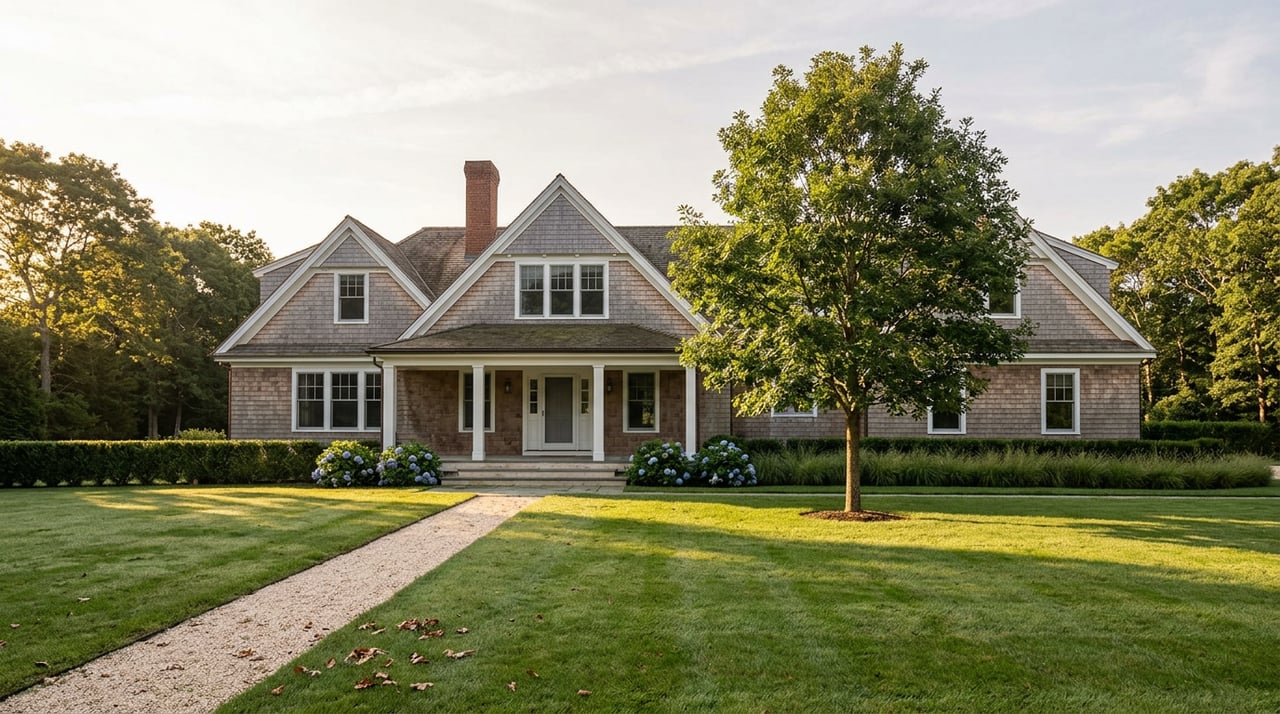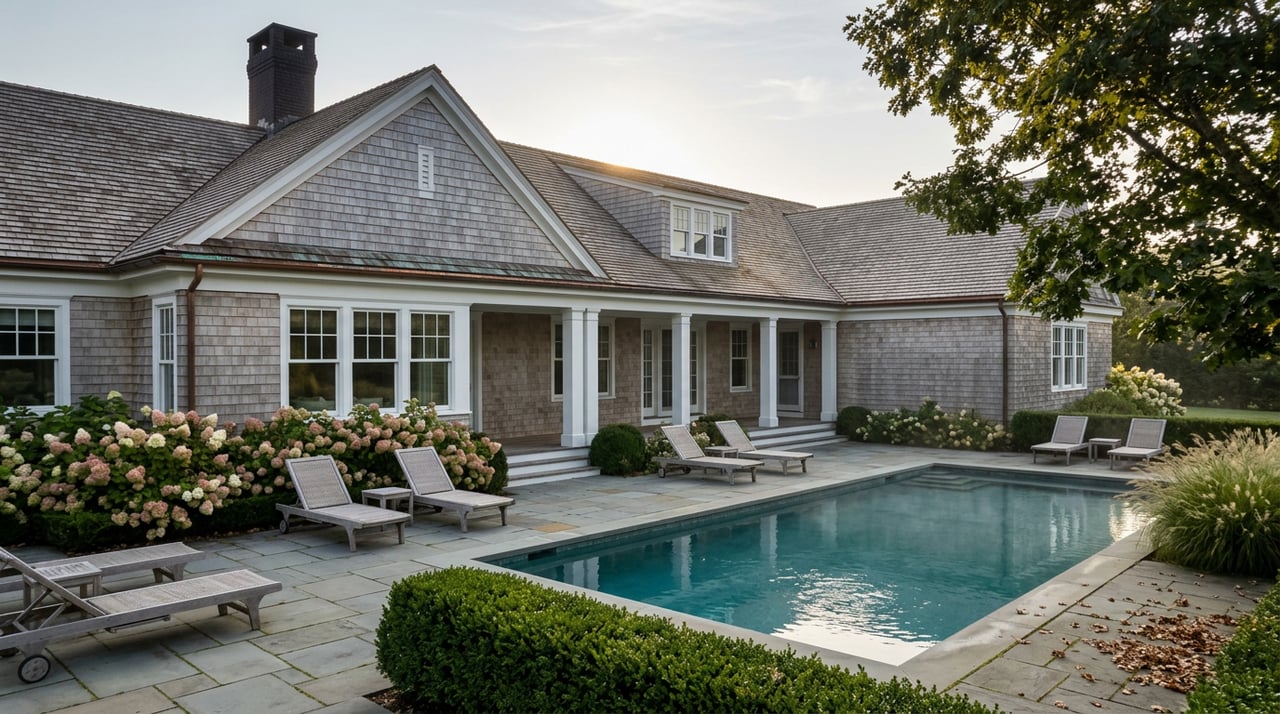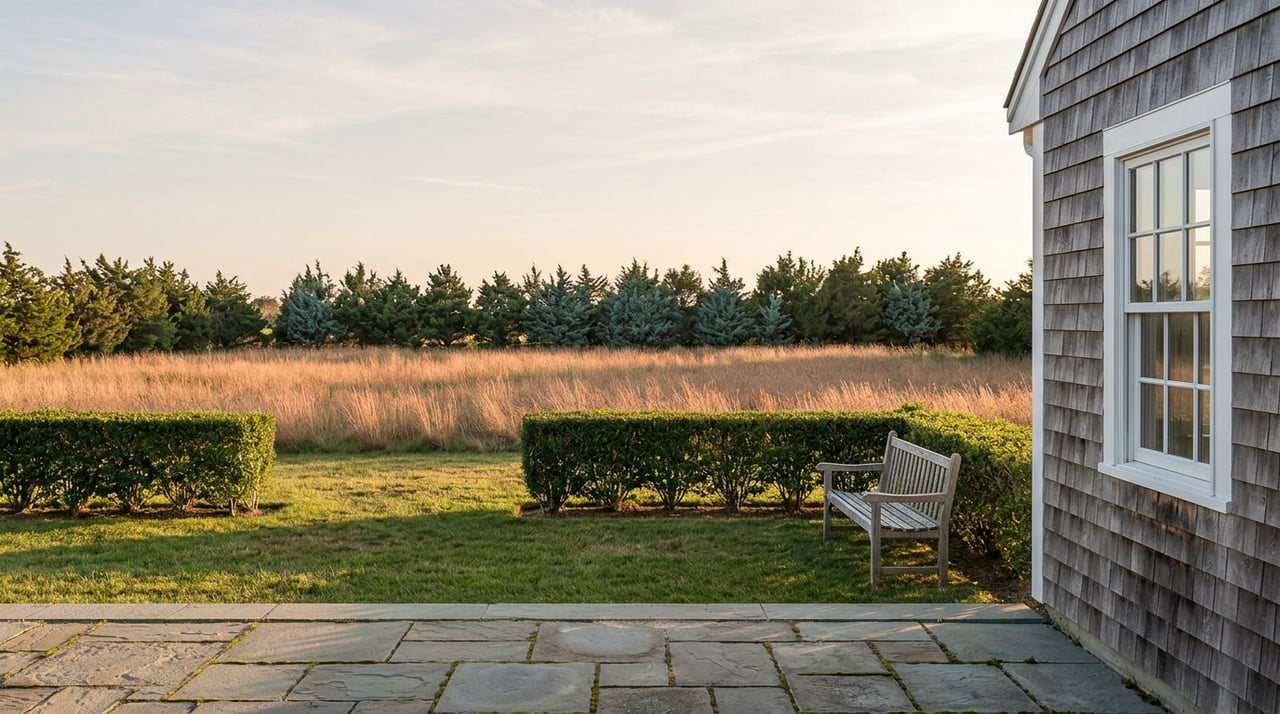
A field in Sagaponack has not been planted since at least 2018. It sits across from Wolffer Estate Vineyard, 8.3 acres bought by the Southampton Town Community Preservation Fund in 2021, and for most of that time nobody has grown anything on it. It has gone back to native grassland instead. Last September, nearly a dozen residents asked the Town Board to change what the parcel is officially called, from preserved farmland to open space. That request, small as it sounds, exposed something buyers in Sagaponack rarely price in: the label on a field next door is not as fixed as the premium attached to it assumes.
If you are looking at a listing that leans on "farmland views" or "agricultural reserve adjacent," this is worth fifteen minutes of your attention before you write an offer.
The Field Across From Wolffer
The parcel was purchased from Geri Bauer, a longtime farming advocate, using Community Preservation Fund revenue, the same 2 percent tax on most Southampton Town real estate sales that has funded land protection since 1999. The town and the Peconic Land Trust had been sorting out how a 1.7-acre scenic easement on the property would affect any farming operation, and while that got worked out the field simply sat. By last fall it had enough ecological value as grassland that some neighbors argued it should stay that way permanently, rather than revert to row crops.
Southampton Town attorney James Burke told the board plainly that nothing requires the town to farm land it buys under the farmland preservation program. Sagaponack Mayor Bill Tillotson and village trustee David McMillan Jr. pushed back against the reclassification, arguing the field should still be worked. Jennifer Hartnagel, director of conservation advocacy at the Group for the East End, tried to reframe the fight entirely, saying the debate should not be farming against wildlife. Dai Dayton, president of the Friends of the Greenbelt, wanted the parcel folded permanently into the Long Pond Greenbelt system, citing the coastal plains pond habitat nearby. Everyone in the room agreed the field mattered. Nobody agreed on what "preserved" was supposed to mean for it.
Three Things "Preserved" Can Mean in Sagaponack
That disagreement points to a distinction that matters more to a buyer than any single acreage figure. Not all preserved farmland in Sagaponack carries the same guarantee, and the differences show up in how a parcel was preserved, not just whether it was.
The first kind is what sits across from Wolffer: land the town bought outright through the CPF and now owns as preserved farmland. This is the version most buyers picture when a listing mentions protected fields, but as the Wolffer parcel shows, town ownership does not obligate anyone to keep the land under cultivation, and the designation itself can become the subject of a public reclassification fight.
The second kind is more common and less visible on a listing sheet. Rather than buying land, the town sometimes buys only the development rights, leaving the parcel in private hands. That is how a Southampton Town deal for East Quogue farmland worked, approved by the Town Board in late 2024 and closed in November 2025. Of three parcels owned by Adrian Cenni on Lewis Road, the town purchased one outright for $5.48 million to create a public park, and bought "enhanced" development rights on the other two rather than acquiring them. Jacqueline Fenlon, who administers the town's Community Preservation Fund, explained that this approach lets the land stay in private ownership and sell at a reduced per-acre price to a working farmer, while permanently barring structures on it. A field preserved this way keeps its agricultural character because a farmer still has an economic reason to plant it, not because the town is managing it as parkland.
The third kind applies to land that has not entered any preservation program at all. Sagaponack's own village code addresses this directly. Under the village's conservation opportunities subdivision rules, any new subdivision must preserve at least 80 percent of the parcel and cut the permitted development yield by half. That is a real constraint, but it is not a ban. A property advertised for its proximity to open farmland that has never been formally preserved is protected by a percentage, not a guarantee, and the buildable remainder can still change what the view looks like in ten years.
Three labels, three different levels of certainty, and only one of them involves the town actually promising to keep the field looking the way it does today.
What the Town Has Spent to Keep It This Way
The scale of the CPF program is part of why buyers assume permanence in the first place. Southampton Town spent $58.11 million on land preservation and historic resources in 2025, the second-highest annual total in five years. In 2024 the town spent $69.26 million, anchored by a $40.1 million purchase of roughly 35 acres of farmland from the Halsey and Topping families spanning Bridgehampton and Sagaponack. Since the fund's creation, the town has collected more than $1 billion in CPF revenue and spent more than $905 million protecting over 5,100 acres.
Read as a trend line, that spending looks like the strongest possible argument for permanence. Read alongside the Wolffer dispute, it reads differently. The town is still actively buying land at a considerable pace, and it is simultaneously debating whether to change the terms on land it already bought. Both things are true at once, and a buyer evaluating a specific field needs to know which one applies to the parcel next to the house, not just to the program as a whole.
The Question Nobody Could Answer
The most useful moment in the whole dispute, for a buyer's purposes, came from Daniel McCormick, counsel to the Community Preservation Department. Asked whether a farmland designation had ever been switched to open space before, he told the board he had only been in the role three years and could not recall it happening, though parkland designations had gone back and forth. Whether stronger legal covenants could prevent a future reclassification remained an open question at the hearing.
Marilee Foster, a Sagaponack farmer, wrote to the board that the real issue was not this one 8.3-acre field but what a reclassification here would signal for every other parcel in the CPF program. That is the crux of it. A designation with no confirmed precedent for change is not the same as a designation that has been tested and held. Buyers evaluating "protected forever" language on a listing are, in effect, betting on a category that a town board has not yet had to definitively rule on.
What This Means Before You Write an Offer
None of this argues against the value of farmland adjacency in Sagaponack. The scarcity is real and the fields genuinely shape what a property is worth. It does argue for asking a more specific question than "is this near preserved land." Ask instead how the specific parcel was preserved: town-owned outright, development-rights-only with a private farmer still working it, or protected only by the village's 80-percent subdivision rule. Ask whether the field has an active management plan or has simply gone fallow, since a fallow field can become the subject of exactly the kind of hearing that happened last September. And ask your attorney to look at whether any covenant on the specific parcel next door has ever been tested by a reclassification request, rather than assuming the word "preserved" answers that on its own.
A Few Direct Questions
Does preserved farmland in Sagaponack have to actually be farmed? No. Southampton Town's own attorney has confirmed there is no legal requirement to farm land purchased under the farmland preservation program, and fields can sit fallow for years while retaining the designation.
Can a farmland designation be changed to open space? It is legally possible and was actively proposed for the Wolffer-adjacent parcel in 2025. Town counsel could not recall a prior instance of that specific change happening for CPF farmland, which means the process is largely untested rather than settled.
What is the difference between town-owned preserved farmland and purchased development rights? Town-owned parcels are held and managed by Southampton Town. Development-rights purchases leave the land in private ownership, often at a reduced price to a working farmer, with structures permanently barred but day-to-day use left to the owner.
If you are weighing a Sagaponack property against what sits beside it, that distinction is worth more than any single acreage number on the listing. Jennifer C. Wilson works these parcels regularly and can walk through what a specific field's preservation history means for your purchase. Get Property Listings Delivered to see what is currently available south and north of the highway.