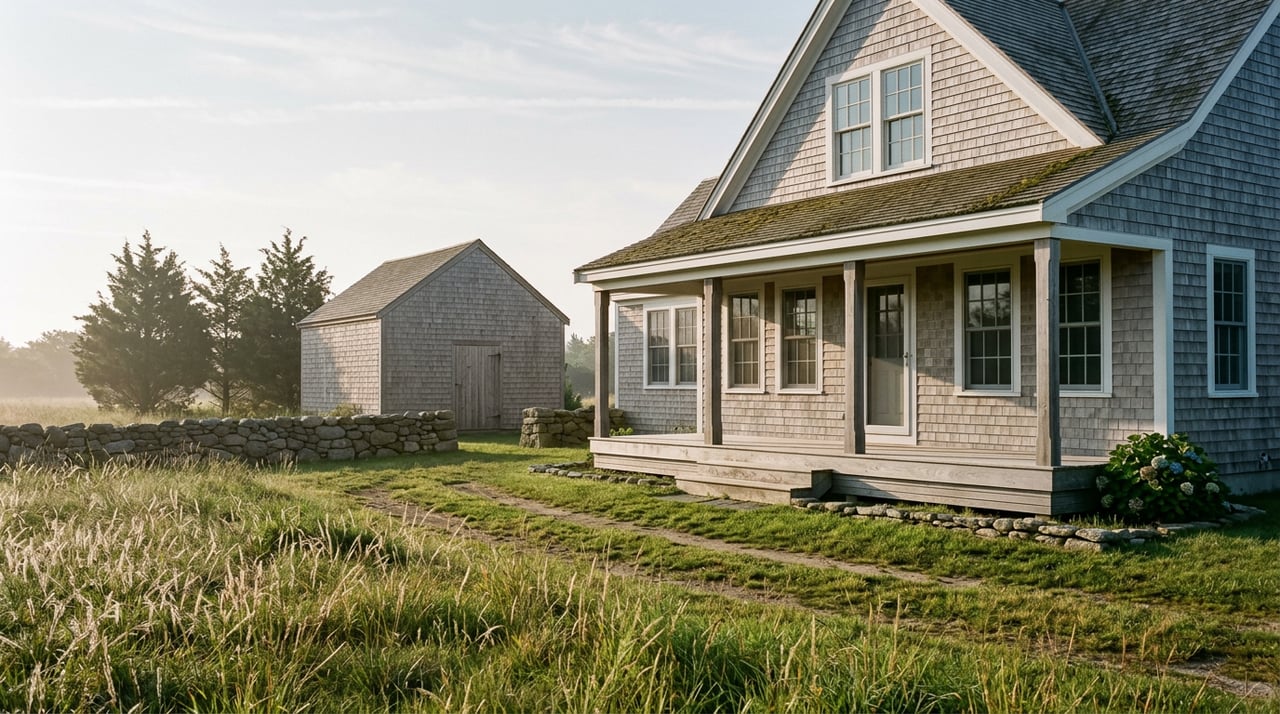
If the town paid a record-breaking sum to preserve 30 acres on Main Street, why can a tractor still show up there next spring?
That is the question hanging over the John Osborn Homestead, the fallow field and pond frontage that most people driving through Wainscott now recognize by its split-rail fencing and its history. In December 2024, East Hampton Town used $56 million in Community Preservation Fund money to buy the 30-acre parcel at 66 Main Street from Ronald Lauder, a price reported at considerably below market value and the largest CPF purchase in the town's history. For a lot of residents, that was the end of the story: the land was saved, case closed. It isn't. A management plan the Town Board adopted this spring, on a 3-2 vote, leaves the door open to active agriculture on the same acreage that borders the most chronically polluted pond in the town's own water quality monitoring program. What the purchase protected, and what it left negotiable, turns out to be two very different things.
What the Purchase Actually Bought
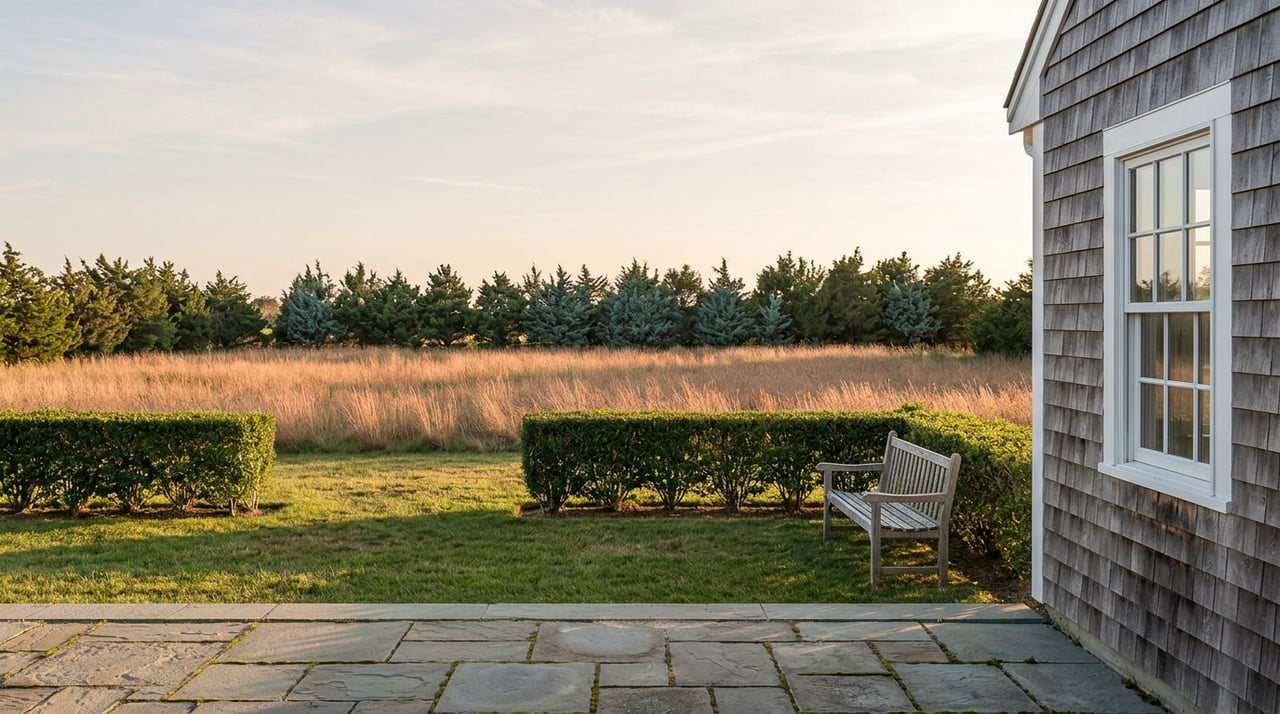
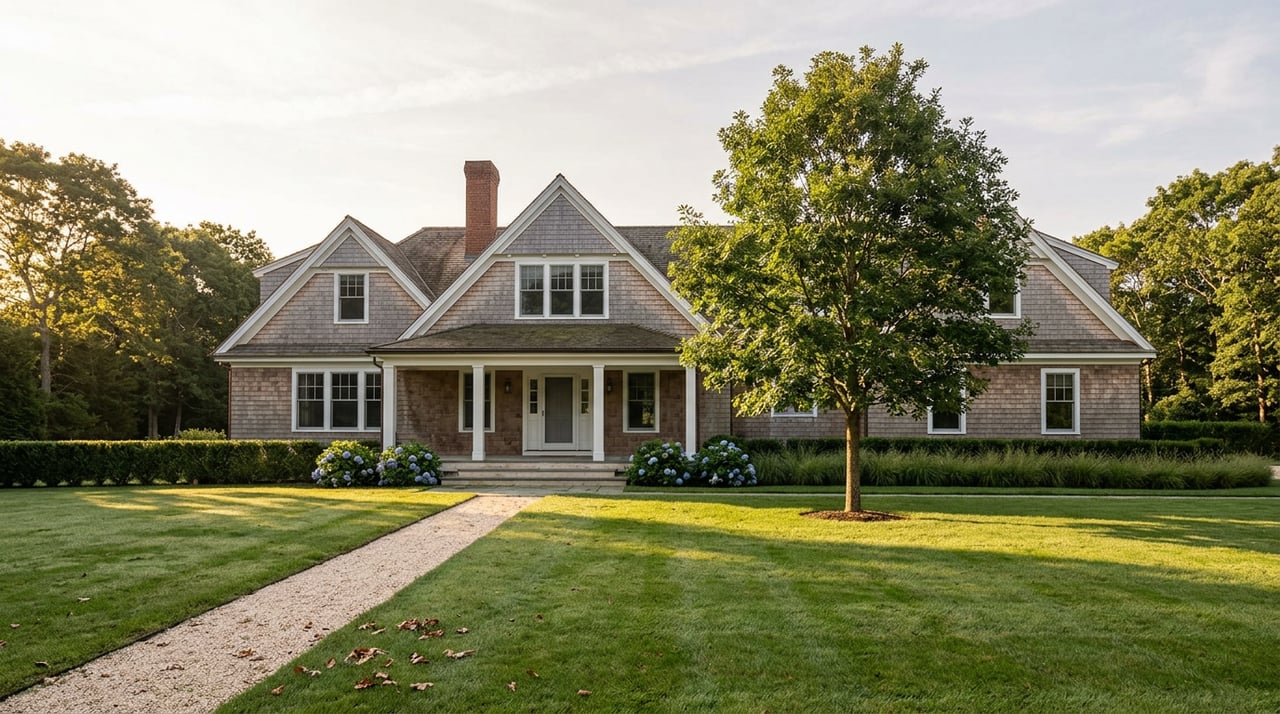
The Osborn family has farmed this ground since 1675. For most of the twentieth century that meant potatoes, then strawberries until 1994, then decades of fallow field that slowly reverted to meadow. Two structures on the property, the 1904 Louisa Edwards Osborn house and a seventeenth-century barn, were formally landmarked by the Town Board in March 2025, a few months after the purchase closed. A third building, a playhouse on the site, was not landmarked, and the town has no stated plan for it.
Here's the distinction that matters and that a lot of the coverage glossed over: landmarking the buildings is not the same as landmarking the land underneath them. Wainscott Heritage Project president Esperanza Leon made this point directly at a March 2026 public hearing, arguing that a homestead's significance is tied to the spatial relationship between the house, the barn, and the acreage around them, and that protecting the structures while leaving the ground unprotected preserves a shell while losing the story. The Town Board heard that argument and, when it came to a vote, did not act on it. The land itself remains unlandmarked.
The Three-Way Split
By April 2026, the fight over the Osborn Homestead's future had narrowed to three specific questions, and Supervisor Kathee Burke-Gonzalez tried to broker a compromise on all three before a straw poll exposed exactly where the board stood:
- Should the 28-acre fallow field be limited to low-impact agriculture, or left open to any farming use the town later decides on?
- Should the proposed walking path through the property be restricted to grass, or should asphalt remain a possibility?
- Should the entire 30-acre parcel receive historic landmark status, or just the two structures already protected?
On all three, the vote split 3-2. Councilwoman Cate Rogers backed the more restrictive language on each point. Councilmen Ian Calder-Piedmonte, David Lys, and Tom Flight did not, and their votes carried. Calder-Piedmonte, who farms himself, put the reasoning plainly at the board's April meeting: the two priorities anyone considering agriculture on the site would have to weigh are the vista and the water quality, and trying to write more specific restrictions into the plan would be, in his word, dangerous. The board then adopted the management plan as originally drafted later that month, agriculture included as one of four possible future uses for the land, the asphalt prohibition left out, and the landmark designation left as structures-only.
None of this means a farm is coming. It means the plan leaves the option on the table for a future board to exercise, without the narrower guardrails that preservation advocates asked for. That's a meaningfully different outcome than "the town saved this land as open space," and it's the part of the story residents are least likely to have absorbed from the initial purchase headlines back in 2024.
Why the Pond Changes the Math
The argument against farming here isn't aesthetic nostalgia. It's Wainscott Pond, which sits adjacent to the homestead and has been the most consistently polluted water body under the East Hampton Town Trustees' jurisdiction for years. Dr. Christopher Gobler of Stony Brook University, who conducts the trustees' annual water quality sampling, has tracked blue-green algae levels in the pond well past the point where comparison to other local ponds becomes useful.
| Measurement | Wainscott Pond | State Reportable Threshold |
|---|---|---|
| 2024 average blue-green algae concentration | 369.3 µg/L | 25 µg/L |
| 2024 peak reading (August) | approximately 800 µg/L | 25 µg/L |
| 2025 reading in late July, declining from a June peak of 350 µg/L | 168.85 µg/L | 25 µg/L |
Every measurement in that table clears the DEC's reportable bloom threshold by a wide margin, and 2024's numbers ran roughly an order of magnitude above what state regulators consider a mean bloom intensity elsewhere in town. Trustee John Aldred, who monitors the pond, noted in the summer of 2025 that the water is still not easy to get to on foot, even though the CPF purchase legally guarantees public access. That's the practical reality behind the vote: any return to fertilizer-dependent agriculture on the 28-acre field sits directly upstream of a pond already failing state water quality standards most of the growing season. Wainscott Heritage Project vice president Jaine Mehring raised exactly this concern at the March hearing, warning that irrigation and ag-related chemicals so close to the water could undermine the water quality remediation the town says it wants.
The Friends of Georgica Pond, which has no direct stake in this particular parcel but tracks nitrogen loading issues across the same watershed, put it more bluntly through executive director Kim Quarty: traditional fertilizer-intensive agriculture poses a documented risk to ponds like this one, even as her organization stopped short of calling for a permanent ban on farming anywhere in town.
What "Preserved" Actually Means Right Now
If you're picturing the Osborn Homestead as a finished park with a marked trailhead, that's not where things stand today. The land is technically accessible now, per the terms of the CPF purchase, but Aldred described it last summer as thick with vegetation and genuinely difficult to reach on foot. The town has hired an engineer to assess the Osborn house's roof leaks and rotting windows and to scope out stabilization work, but no licensee has been found yet for either the house or the barn, which means the town itself will maintain the structures in the meantime.
The East Hampton Trails Preservation Society has already run at least one guided walk of the property's perimeter, led by Esperanza Leon alongside Hilary Osborn Malecki, a descendant of the family that farmed the land for nearly three and a half centuries. That kind of programming, not a paved loop with a parking lot, is closer to what public access looks like at this stage. The multi-use path itself, whatever surface it ends up being, has not been built.
None of the open questions here are settled for good. Burke-Gonzalez made a point during the April debate of noting that management plans aren't permanent, that a future public hearing and board vote can revisit any of this. For residents who care about the outcome, that means the conversation happening now, at Wainscott Citizens Advisory Committee meetings and Town Board sessions, is not a formality. It's the actual decision-making process, still in motion.
The Takeaway for Anyone Who Lives Here
The headline everyone remembers is the $56 million. The part worth remembering going forward is what that number did and didn't lock in. It secured the land from private redevelopment. It did not secure the meadow as meadow, the trail as unpaved, or the full parcel as historically protected. Those decisions are still being made in real time, by a board that has already shown, on a 3-2 vote, which direction it currently leans.
Jennifer C. Wilson tracks land use and preservation stories like this one across the eastern South Fork because they shape what a place feels like to live in years before they show up in any sale listing. If you want these kinds of local developments delivered as they happen, along with the weekly market intelligence her clients rely on, visit Jennifer C. Wilson and get property listings delivered directly to your inbox.